Most senior citizens and the people that care for them are utilized to taking care of medication graphes, clinical appointments, and mobility concerns. Yet when I ask teams of caretakers, "Who below feels great taking care of a choking episode or a sudden collapse in your home?", only a few hands increase. The rest consider the floor and confess they would most likely panic.
That void in between everyday responsibility and emergency situation self-confidence is precisely where an express first aid course earns its maintain. When every minute issues, a couple of targeted hours of first aid training can transform complication right into calm action.
This guide looks at just how fast first aid courses, express CPR training, and focused first aid and CPR courses can be tailored to elders and caregivers, including grandparents caring for kids. It makes use of what I have actually seen in actual training spaces and in real emergency situations, in houses that look much like yours.
Why first aid for seniors is different
A standard first aid course is developed around the typical grown-up without any major health problems. That does not define most people over 65, and it absolutely does not explain most of the relative who care for them.
With senior citizens, the emergencies you are more than likely to face modification, and so do the threats of each treatment. Chest compressions on a thirty years old gym-goer and compressions on an 82 year old with weak bones are very various in feeling, in danger, and in emotional weight.
When I run first aid and CPR training classes with older learners, a couple of motifs show up consistently:
Caregivers stress over "doing more injury than excellent" with CPR or moving someone after an autumn. Elders commonly are afraid coming to be a "burden" if something goes wrong, and that anxiety can make them hide very early warning signs. Families are commonly handling numerous problems simultaneously - heart disease, diabetes mellitus, joint inflammation, early dementia - which alters what a first aid action should look like.
An express first aid course that acknowledges those realities aids individuals quit presuming and start showing informed confidence.
The emergencies elders and caretakers are probably to see
The data match what I have heard at many kitchen area tables. The most usual emergencies in older grownups are generally connected to the heart, breathing, brain, blood sugar, and mobility.
Cardiac events and strokes control the severe end of the spectrum. An abrupt collapse in the living room, slurred speech at morning meal, or chest pain that will certainly not alleviate after rest are all circumstances where fast, clear-headed actions make the distinction in between recuperation and long-lasting impairment or death.
Breathing problems, from COPD flare-ups to choking on food, are an additional frequent difficulty. Thin fluids, blended appearances, and dentures can all increase choking threat in your home. Many individuals only consider choking in kids; in technique, I have actually made use of abdominal thrusts more frequently on older adults.
Falls are the quiet, slow-burning emergency in the background. Not every fall needs a rescue, however way too many are swept aside without checking for concealed injuries or head trauma. A good fast first aid course hangs out on just how to evaluate an autumn, when to relocate a person, and when to demand clinical review.
Then there is blood sugar level. With so many older adults taking care of diabetic issues or pre-diabetes, caregivers consistently find themselves guessing whether a liked one is "just weary" or slipping into a hypoglycaemic state. Without some targeted first aid training, that think can go severely wrong.
Express first aid training is at its best when it zooms in on these sensible scenarios instead of spreading itself thin on every feasible injury.
What makes an express first aid course "express"
When individuals look for a fast first aid course near me, they are typically handling work, appointments, and tiredness. Seniors might have problem with lengthy class days, and unpaid caregivers are currently extended. A well created express first aid course values that reality without thinning down the life-saving core.
An express first aid course or express CPR course focuses on:
Short, snugly structured sessions, commonly 2 to 4 hours, with clear concerns. High-impact topics: CPR, choking, extreme bleeding, stroke, cardiac arrest, and when to call for help. Practical, repeated method over long lectures, using manikins and easy circumstances. Ordinary language, not medical jargon, specifically when handling mixed-age groups.
The finest express first aid training trims non-essential detail while maintaining the steps that really alter end results in the initial few mins of an emergency. It is not about "shortcutting" safety; it has to do with removing the clutter.
You will additionally see numerous service providers using express first aid and CPR courses that blend on-line product with a short face-to-face useful part. For senior citizens and caretakers, that can be optimal. You review concept at your very own speed, then attend a concentrated on-site session to carry out compressions, technique healing settings, and go through real-life scenarios.
Fast certification is attractive, but speed ought to never be the CPR and first aid training courses only variable. A three hour session that leaves you nervous and unclear is not a bargain.
Core abilities every senior and caretaker should learn
Over the years, I have had the exact same conversation with thousands of family members: "What should we absolutely recognize, even if we do not end up being professionals?" The solution fits surprisingly well right into a useful fast first aid course.
A strong express first aid course for senior citizens and caregivers will constantly cover CPR training for grownups, with focus on changing hand placement and force for older chests. Numerous additionally consist of express CPR training for infants and youngsters, which is crucial for grandparents and part-time carers.
Choking feedback, consisting of back blows and abdominal thrusts, is worthy of more method time than several conventional courses provide it. In real life, it is rare to carry out just one method; you frequently need to cycle in between them.
Stroke acknowledgment utilizing straightforward memory aids like FAST (Face, Arms, Speech, Time) is non-negotiable. The home window for clot-busting treatment is measured in hours, not days. A caregiver who hesitates overnight can unintentionally close that window.
Managing breast pain in the house is another functional subject. Senior citizens with steady angina frequently downplay new symptoms or assume "it is simply the common". Caretakers find out to differentiate patterns that are typical for that person from indicators that something a lot more major is unraveling. They likewise discover exactly how to help with prescribed medication such as nitrates without slipping into the duty of amateur doctor.
Blood sugar emergency situations in diabetics, especially recognising hypo versus hyper states, usually take advantage of scenario-based technique. I when dealt with a child who had actually hesitated to offer her mommy any type of sugar "simply in instance it made points even worse". After a concentrated first aid training session that used her mother's real medication checklist as a training tool, she felt great adequate to act early as opposed to waiting on an ambulance each time her mommy seemed "unclear".
Good courses likewise hang out on the quieter however crucial skills: safe relocating and positioning, making use of pillows and rolled towels to maintain airways open, speaking with paramedics in a clear and concise means, and taking care of the emotional shock of an unexpected event.
How express CPR and first aid deals with older bodies
The greatest mental block I see in senior citizens and their family members is the worry of causing harm. I hear it nearly weekly: "Suppose I damage a rib?" Or "His neck is delicate, I am frightened to move him."
Here is the frank solution I give up class. Yes, CPR can break ribs, especially in older adults with weakening of bones. That is not a failure. It is a known, acceptable side effect of attempting to save a life where the alternative is fatality. Emergency situation physicians would rather deal with a rib crack in a living person than satisfy a family that did nothing for worry of a fracture.
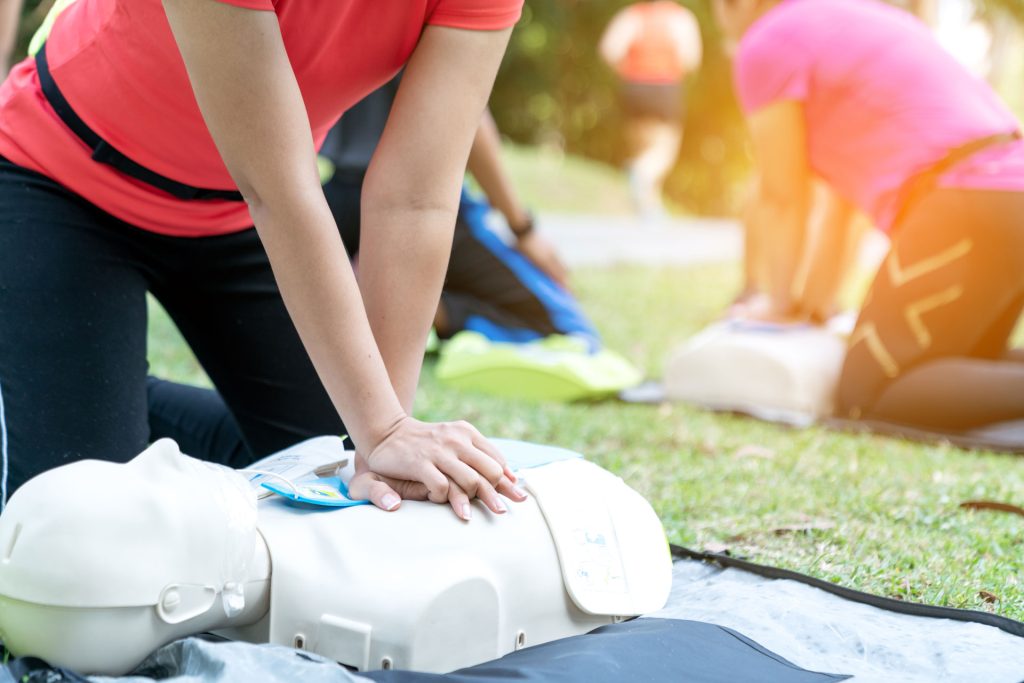
In express CPR courses designed for senior citizens, instructors should show safe hand placement, deepness adjustments when appropriate, and just how to utilize your body weight without "throwing" on your own onto the chest. Learners reach feel the resistance of a manikin and calibrate their toughness prior to encountering a real chest.

For falls and believed fractures, express first aid training focuses on evaluation and convenience rather than brave lifting. We walk through:
Talking to the person and utilizing their very own report of discomfort and wheelchair as your very first overview. Looking for noticeable deformities, swelling, or blood loss. Supporting the injured area with rolled towels or coverings. Utilizing breathing and discussion to keep stress and anxiety down while you choose next steps.
The objective is not to turn caretakers into paramedics. The objective is to aid them make good decisions concerning when to wait on advice, when to call a rescue quickly, and when it is risk-free to aid someone stand with support.
Express child care first aid for grandparents and older carers
More and even more grandparents give normal childcare. Many are active and capable, however they often discovered their original first aid years earlier. Guidelines transform. The CPR you learned in 1995 is not the CPR utilized in current first aid and cpr courses.
That is where express child care first aid courses make their location. In half a day or much less, they refocus on the emergency situations that genuinely happen with babies and kids when a grandparent is in charge: choking on small food pieces, allergic reactions at college pick-up, burns from warm beverages, and falls from play area equipment.
An express child care first aid course or express childcare first aid training session usually tightens its web content to:
Child and infant CPR, with lots of repeating. Choking administration for children and young children, consisting of exactly how to make use of gravity and your very own leg or lap as support. Acknowledging serious breathing problems such as asthma assaults. Dealing with head bumps without panicking about every bruise.
I keep in mind one grandfather in his very early seventies who reached an express childcare first aid course noticeably ashamed. He had actually elevated 3 kids of his very own, and he felt silly "going back to college". Halfway with baby CPR method he looked up and claimed, "I had no idea the compression deepness was this various for babies currently. I have actually been out of date for twenty years."
By completion, he insisted that his adult kids likewise attend a fast CPR correspondence course. When whole family members commit to the exact same up-to-date method, kids and senior citizens both benefit.
Choosing the ideal fast first aid or express CPR course
People usually feel bewildered by the series of first aid courses and cpr courses on offer. Some desire the fastest feasible express first aid course to please a workplace list. Others require a deeper, much more tailor-maked first aid training experience yet do not know how to request it.
When the focus is seniors and caretakers, a couple of choice standards constantly matter more than cost or brand.
A brief checklist can aid:
Confirm that the supplier provides certain material on older grownups, chronic health problem, or home caregiving, not just generic workplace accidents. Ask whether the express first aid training includes practical CPR training on manikins and repeated technique of choking methods, not simply demo. Check for how long the first aid certificate will certainly stay legitimate and whether they run fast cpr refresher course options, specifically if movement problems make traveling hard. Look for fitness instructors with clinical or real-world emergency histories, that can speak to border situations such as pacemakers, frailty, or dementia-related behaviours. Make sure course dimension is little sufficient that senior citizens obtain hands-on mentoring, not just a seat at the back.If your search history currently consists of phrases like fast first aid course near me or express cpr courses, put in the time to call 1 or 2 providers and define your precise circumstance. A reliable trainer will certainly tell you honestly whether their express first aid courses fit your requirements or whether you would certainly be better with a somewhat longer format.
Avoid any kind of carrier that appears a lot more thinking about pressing you through for a "fast certification" than in ensuring you understand what you are doing.
What an express first aid training session really feels like
Many senior citizens arrive at their very first fast first aid training with two specific anxieties: "I am too old to learn this" and "I am going to hold the course back."
A great cpr refresher course Salisbury fitness instructor heads that off swiftly. We start with basic, low-stress abilities: how to examine responsiveness, just how to scream for assistance, affordable courses for first aid near me exactly how to roll a person right into the healing placement securely. Once individuals have relocated a manikin a couple of times and felt the activity in their very own bodies, they kick back enough to tackle CPR and choking drills.
An express first aid and cpr course usually blends brief bursts of explanation with cycles of method. For example, you might spend 10 minutes evaluating the steps of adult CPR, then rotate via carrying out those action in sets, with the instructor fixing hand setting and compression rhythm.
The speed is quick however not hurried. The focus stays on high-yield skills as opposed to prolonged discussion of unusual injuries. Senior citizens that tire conveniently are urged to take brief relaxes in between drills, without seeming like they are falling short the course. We focus on chair elevation, lights, and noise due to the fact that these functional details matter greater than lots of people think.
In mixed-generation classes, it prevails to see a caretaker youngster supporting a moms and dad during positioning practice or reading out the actions from a timely card while the older person performs the activities. That sort of teamwork mirrors what will occur at home in real emergencies.
By the end of an express first aid course, many elders are pleasantly shocked by just how much their bodies keep in mind, even if their minds still feel unsure. That muscle mass memory is exactly what you wish to build.
Keeping skills fresh: fast CPR refresher and recurring practice
First aid resembles an international language. If you do not utilize it, you shed it. Research study and experience both suggest that CPR quality drops visibly within 6 to 12 months without method. For senior citizens, that issues a lot more, since physical strength and versatility can transform over that same period.
A fast cpr refresher course, preferably annually, assists recalibrate your strategy. You can examine whether you are still pushing deep enough on the upper body, whether you can still manage a complete two minutes of compressions, and what adaptations might help if joint inflammation or shoulder pain has progressed.
Short, focused first aid and cpr training classes can also address new facts. Perhaps an enjoyed one has actually just recently been detected with heart failure, or a grandchild has established a significant allergic reaction, or a partner has started on blood thinners. Each modification brings new first aid effects. An excellent teacher can stroll you via them utilizing your real situations, not simply textbook examples.
Between official courses, I frequently recommend that family members maintain an easy routine at home. When every few months, sit together and talk through one "suppose" circumstance, such as "Suppose Grandfather collapsed in the yard?" Or "What if our young child choked on a grape at lunch?" Have everyone claim aloud what they would do first, 2nd, and 3rd. It takes five mins but keeps the pathways in your brain heated up.
Cards or fridge charts summing up CPR steps, stroke indications, and emergency numbers are also worth their weight in gold when adrenaline is high.

When first aid meets real life: 3 brief stories
Theory is neat. Genuine homes are not. They have carpets to journey on, tvs shrieking behind-the-scenes, and family members dynamics that can assist or impede a response.
I once collaborated with a couple in their late seventies. The spouse suffered a cardiac arrest in the corridor while searching for his shoes. His other half, who had done a fast first aid course at their area centre six months earlier, recognised that he was not taking a breath generally. She started chest compressions while screaming to a neighbor to call an ambulance. Paramedics later informed her that those first few minutes of incomplete but consistent compressions were the factor they had something to deal with when they arrived.
In another instance, a daughter caring for her diabetic mother discovered slurred speech and facial droop during morning tea. Prior to her first aid training, she would have presumed "low sugar" and provided juice. After an express first aid and cpr course that drilled stroke indications, she called emergency situation solutions immediately. Hospital personnel verified a stroke and had the ability to deal with within the critical home window. The mother left of health center with only small weakness.
A final story entails a grandfather at a park with his 3 year old grandson. The child began to choke on a piece of sausage. Because the grandfather had lately finished an express child care first aid course, his feedback was almost automatic: he positioned the kid leaning forward, provided company back strikes, and cleared the obstruction. By the time other adults saw something was wrong, the danger had actually passed. Later, he admitted that prior to that training he would have attempted to "fish around" in the child's mouth, which can press objects deeper.
None of these individuals thought of themselves as heroes. They merely had enough first aid training, freshened sufficient times, to bridge the space until professionals arrived.
Bringing express first aid into your family's routine
The real measure of success for any kind of fast first aid course or express cpr training is not the card in your budget, but the calmness you bring to your next crisis.
For senior citizens and caregivers, that calm does not come from memorizing every method. It originates from recognizing a handful of high-impact actions and having actually practiced them on a timetable that appreciates your energy and your life.
If you are a senior, a caretaker, or a grandparent, consider making express first aid courses part of your regular wellness regimen, alongside exams and drug reviews. Search for providers that treat your lived experience as a property, not an obstacle, and who fit adapting first aid mentor to arthritis, listening to difficulties, or mobility limits.
The combination of a concentrated express first aid course, regular fast cpr correspondence course sessions, and honest discussion within your household can transform the means you encounter emergencies at home. You can not forecast when the next dilemma will certainly strike. You can pick exactly how prepared you will certainly be when it does.